You can use data entry landing pages to see how likely your users are to enter sensitive information into a webpage. When your users select a link in a phishing test, they will be redirected to a landing page with a data entry form. If your users enter data onto the form and submit it, their action will be considered a phishing failure.
You can also add a secondary landing page that your user will see if they fail the test. This secondary landing page can inform the user that they failed the test and provide the user with tips on how to stay safe from future attacks. After your users have completed the test, you will be able to review their results in a report.
For general information about landing pages, see our Create and Edit Email Templates and Landing Pages and Managing Landing Pages articles.
Using Our Data Entry Phishing Templates
When you create a phishing campaign, you can use our data entry phishing templates to see how likely your users are to enter data onto a landing page. For general information about phishing campaigns, see our Create and Manage Phishing Campaigns article.
To create a new phishing campaign with our data entry phishing templates, follow the steps below:
- Log in to your KnowBe4 account and navigate to the Phishing tab.
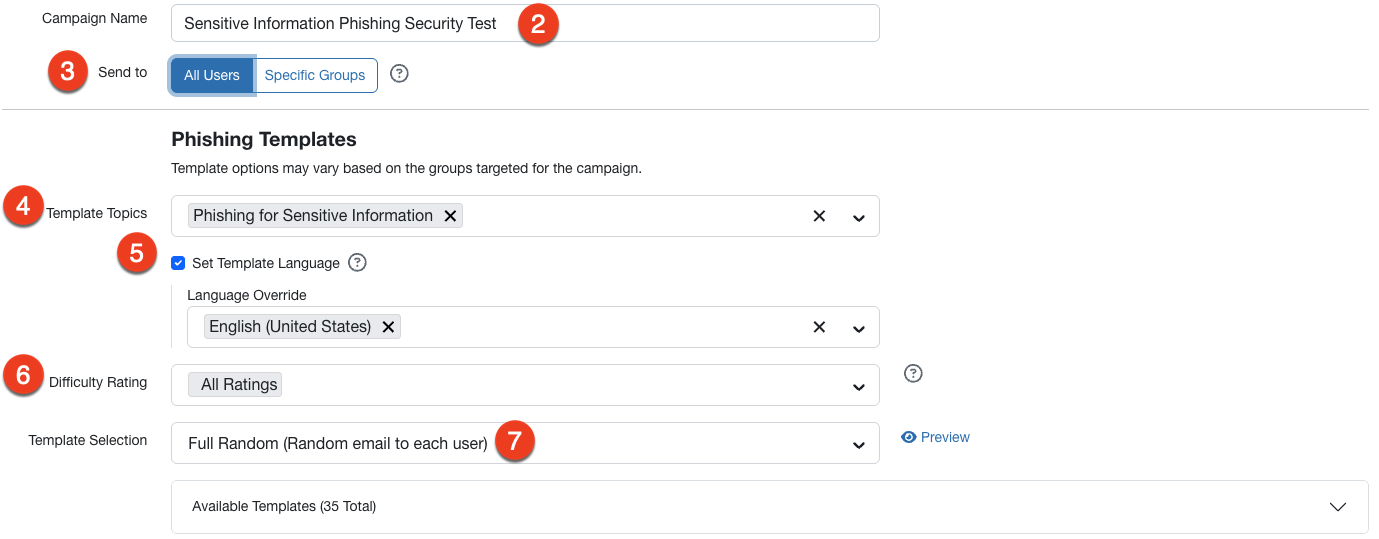
- Click + Create Phishing Campaign. Name your phishing campaign.
-
In the Send to section, select All Users.
-
In the Phishing Templates section, from the first Template Topics drop-down menu, select Phishing For Sensitive Information.
- Select the Set Template Language check box and select the phishing campaign’s language.
-
In the Difficulty Rating drop-down menu, select All Ratings.
- From the second drop-down menu, select Full Random.
- Do not change the Landing Page field.
- Customize the rest of the settings as you would like, then click Create Campaign.
Creating Your Own Data Entry Landing Page
You also have the option to create your own data entry landing page. For more information, see our Create a Data Entry Landing Page article.